
Start with the container, not the mix
Before changing the growing medium, check the physical setup. Confirm that drainage outlets are open and not blocked by a saucer, liner, root mat or compacted layer. Note the container shape: a tall, narrow pot and a shallow, wide one hold water differently, and the same volume of mix does not behave the same way in both. Also identify the growing system. A self-watering design uses a water reservoir and has different watering arrangements from a simple drained pot, so plan for the actual container you are using.
Container watering needs vary with weather, plant growth and growing medium. A pot that stays wet in cool, cloudy conditions may dry quickly in heat or as plants grow. Record the conditions when you observe the problem so you can compare like with like.
- Check that every drainage outlet is clear and that water can leave the container freely.
- Remove saucers or liners that hold water against the base, or empty them after watering.
- Note the container shape, volume and whether it is a self-watering design.
- Write down the weather and plant size on the day you observe the problem.
Source context: University of Maryland Extension
Wet mix versus water-repellent mix
A mix that stays wet and a mix that repels water can look similar at the surface but have different causes. Dense, compacted material can hold water and leave little air space for roots. Growing medium must support roots while holding appropriate water and air, and dense garden soil behaves differently from a container mix. If the mix has been pressed down or has broken down over time, water may sit rather than move through it.
Water repellency often appears when soilless ingredients have dried out thoroughly. Water can run down the inside edge of the pot and out of the outlet without wetting the root zone. Dry ingredients may need to be moistened gradually rather than flooded once. For container vegetables, the source guide lists commercial soilless mix and an equal-volume soilless-mix and compost blend among its options; this is a menu of choices, not a prescription for a particular crop or problem.
- Look for a hard, shrunken surface and water running straight to the outlet, which suggests a dry, repellent mix.
- Look for a dense, heavy, waterlogged mass, which suggests compaction or a mix that has broken down.
- Loosen only the surface if it is crusted, and water in small amounts to let dry material absorb.
- Do not assume old mix is unchanged; remove plant residue and do not save medium associated with root disease.
Source context: University of Maryland Extension
Make a measured watering and drainage observation
A simple observation helps you tell whether water is entering the mix, passing through too quickly or staying in the container. Apply a measured amount of water, such as from a marked jug, and watch where it goes. Note how long it takes to appear at the outlet, whether it runs down the inside wall, and whether the surface darkens evenly. Then check the mix at a shallow depth after a set interval.
This is a diagnostic observation, not a test of crop performance. It does not tell you a correct watering volume for every plant or season. Its value is comparison: repeat the same measured observation under similar conditions after you clear outlets, adjust the saucer or re-moisten a dry surface, and see whether the behavior changes.
- Use a marked container to apply a known amount of water.
- Time how long water takes to reach the drainage outlet.
- Watch whether water wets the surface evenly or channels down the side.
- Check the mix at a shallow depth after a set interval and record what you find.
- Repeat under similar weather and plant size so the comparison is fair.
Source context: University of Maryland Extension · University of Maryland Extension
Aeration is not the same as drying speed
Aeration refers to air space within the mix that roots can use. Drying speed refers to how quickly water leaves the container through plant use, evaporation and drainage. A mix can drain freely and still dry slowly in cool weather, or it can dry quickly at the surface while remaining wet lower down. Treating a wet container by adding more drainage holes does not automatically improve aeration if the mix itself is compacted or broken down.
For reuse, the source guide describes blending old and fresh material rather than assuming old mix is unchanged. Remove plant residue and do not save medium associated with root disease. When you blend, keep track of what went into the container so you can interpret later watering observations.
- Judge aeration by the condition of the mix in the root zone, not only by how fast surface water disappears.
- Judge drying speed by how the container changes over hours or days under the same weather and plant size.
- When reusing mix, remove plant residue and discard medium associated with root disease.
- Blend old and fresh material rather than treating old mix as unchanged.
Source context: University of Maryland Extension
Check your measured example
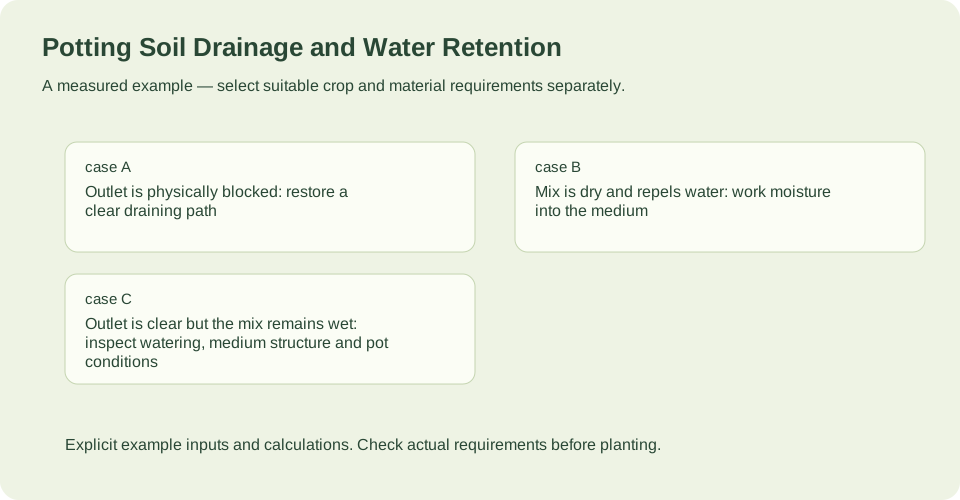
An inspection scenario, not a watering trial: distinguish a blocked outlet from dry, water-repellent mix before changing ingredients.
| Quantity | Calculated result |
|---|---|
| case A | Outlet is physically blocked: restore a clear draining path |
| case B | Mix is dry and repels water: work moisture into the medium |
| case C | Outlet is clear but the mix remains wet: inspect watering, medium structure and pot conditions |
Check the physical drainage route and how the mix takes up water before adding an amendment. Similar surface symptoms can have different causes.
Example inputs explain the method. Review the source context, chosen cultivar and actual site before planting or ordering.
Your before-you-plant checklist
- Drainage outlets are clear and water can leave the container.
- Saucers or liners are not holding water against the base.
- Container shape and growing system are noted before judging the mix.
- A measured watering observation is recorded with weather and plant size.
- Old mix is checked for plant residue and root disease before any reuse.
Questions that come up while planning
Why does water run straight out of my pot without wetting the mix?
Dry soilless ingredients can repel water, so it may channel down the inside wall and out of the outlet. Water gradually in small amounts to let the material absorb, and check that the surface darkens evenly rather than flooding once.
Does a self-watering container need the same watering check?
No. Self-watering designs use a water reservoir and have different watering arrangements, so plan for the actual container and growing system rather than applying the same observation to every pot.
Can I reuse old potting mix if it stayed wet?
Remove plant residue and do not save medium associated with root disease. The source guide describes blending old and fresh material rather than assuming old mix is unchanged.
Sources & method
Horticultural guidance is linked to its original source and regional context. Geometry and unit conversions are calculated separately. Read how we prepare and check a page.
- Growing Media (Potting Soil) for ContainersUniversity of Maryland Extension
- Growing Vegetables in Containers and Salad TablesUniversity of Maryland Extension