
Start with what the mix is for
Container growing medium has to support roots while holding a workable balance of water and air. Dense garden soil behaves differently from a container mix, so leftover garden soil and leftover soilless mix should not be judged by the same standard. For container vegetables, the supplied guide lists commercial soilless mix and an equal-volume soilless-mix and compost blend among its options. That is context for what belongs in a container, not a recipe for refreshing old material.
Before storing anything, label the bag or bin with what it is and where it has been. A bag that stayed sealed in a dry shed is a different case from a bucket that held a plant through the season. The label helps you apply the right decision later instead of guessing.
- Identify whether the material is container mix, a mix and compost blend, or garden soil.
- Note whether the bag is unopened, opened but unused, or previously planted.
- Record where and how long it has been stored.
Source context: University of Maryland Extension
Keep, inspect or replace
Keep unopened mix that is dry, intact and free of pests or mold. Opened but unused mix can often be kept if it stayed dry and clean, but inspect it first. Previously planted mix needs closer inspection because roots, plant residue and moisture have changed it. The supplied guide says to remove plant residue and not to save medium associated with root disease. It also describes blending old and fresh material rather than assuming old mix is unchanged.
Inspect for wetness, sour or musty odor, mold, insects, roots and other residue. Check structure by handling a small amount: if it has become compacted, waterlogged or clearly different from fresh mix, treat it as replace rather than keep. Do not set a fixed universal expiry date; condition and history matter more than a date on the bag.
- Reject any mix associated with root disease.
- Remove plant residue from previously planted mix before deciding.
- Inspect for mold, pests, odor, wetness and compaction.
- Choose keep for clean dry material, inspect for borderline opened mix, and replace for diseased or degraded material.
Source context: University of Maryland Extension
Store leftovers so they stay usable
Moisture is the main practical issue. Keep opened mix dry and protected from rain, and avoid sealing wet mix into a closed container where it can stay soggy. Store bags off the ground where practical and keep them closed enough to exclude pests and debris. Container watering needs vary with weather, plant growth and growing medium, so leftover mix that has been wet is not automatically ruined, but it should be inspected before reuse.
Plan storage around the actual container and growing system you will use. Self-watering designs have different water-reservoir arrangements, so leftover mix intended for one system may not suit another without checking. Storage decisions should follow the material and the planned use, not a generic rule.
- Keep opened mix dry and protected from rain.
- Avoid sealing wet mix into a closed container.
- Store bags off the ground and closed against pests and debris.
- Match leftover mix to the actual container and watering system before reuse.
Source context: University of Maryland Extension · University of Maryland Extension
Sort the materials before planning reuse
Sort unused and previously planted materials before storage. A disease history changes the reuse decision; elapsed shelf time alone cannot resolve it.
Source context: University of Maryland Extension
Check your measured example
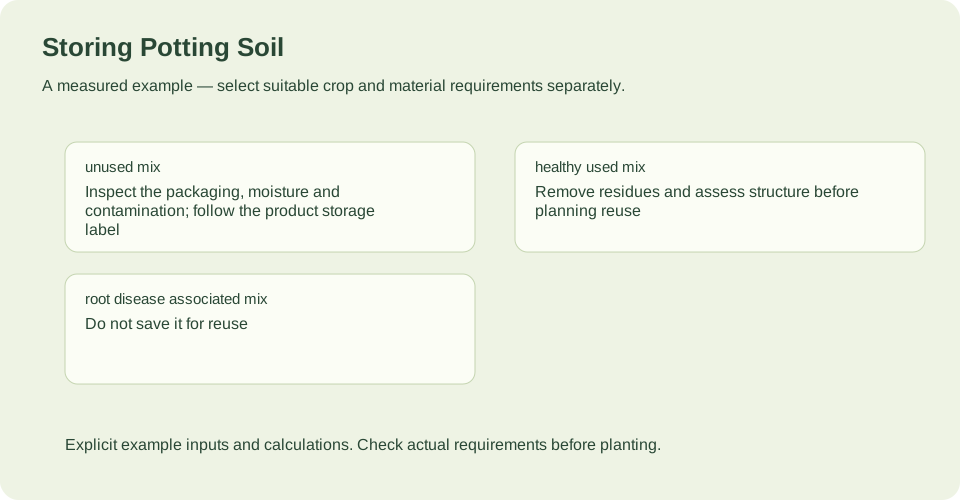
A hypothetical end-of-season sorting example: unused mix is assessed separately from material that supported a plant with root disease. This is a storage decision, not an expiry-date calculation.
| Quantity | Calculated result |
|---|---|
| unused mix | Inspect the packaging, moisture and contamination; follow the product storage label |
| healthy used mix | Remove residues and assess structure before planning reuse |
| root disease associated mix | Do not save it for reuse |
Sort unused and previously planted materials before storage. A disease history changes the reuse decision; elapsed shelf time alone cannot resolve it.
Example inputs explain the method. Review the source context, chosen cultivar and actual site before planting or ordering.
Your before-you-plant checklist
- Bag or bin labeled with mix type and prior use
- No root disease associated with the material
- Plant residue removed from previously planted mix
- No mold, pests, sour odor or waterlogging found
- Opened mix stored dry and protected from rain
- Volume checked against package label units before use
Questions that come up while planning
Does potting soil have a fixed shelf life?
No single universal expiry date applies. Condition, storage and prior use matter more. Keep clean dry unopened mix, inspect opened or leftover mix, and replace material associated with root disease or clearly degraded structure.
Can I reuse mix from a container that had a diseased plant?
No. The supplied guide says not to save medium associated with root disease. Remove plant residue from other previously planted mix and inspect it before deciding whether to keep or replace it.
Can I blend old mix with fresh mix?
The supplied guide describes blending old and fresh material rather than assuming old mix is unchanged. Inspect the old material first and reject any associated with root disease.
Sources & method
Horticultural guidance is linked to its original source and regional context. Geometry and unit conversions are calculated separately. Read how we prepare and check a page.
- Growing Media (Potting Soil) for ContainersUniversity of Maryland Extension
- Growing Vegetables in Containers and Salad TablesUniversity of Maryland Extension