
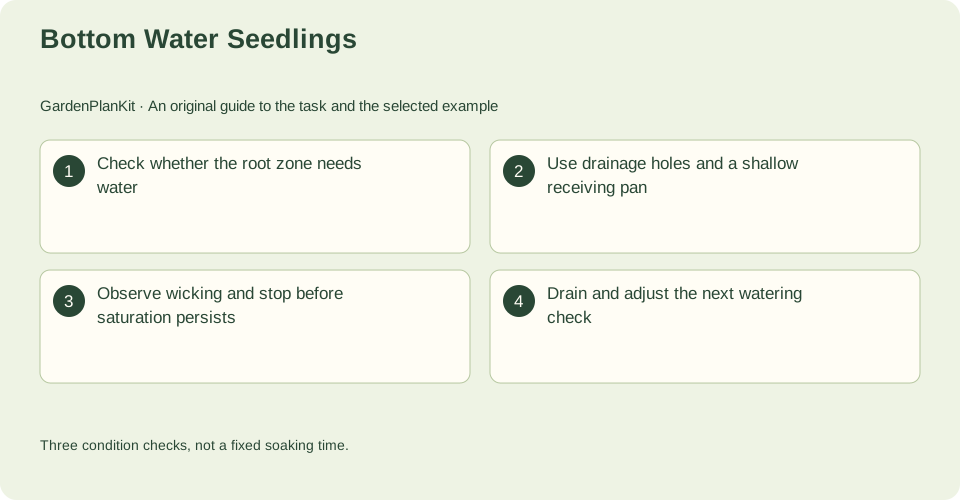
Check whether the root zone needs water
Start by looking at the upper growing medium. Maryland advises watering when the upper medium is nearly dry, so a dry surface is a cue to inspect further rather than an automatic command to soak. Look at the rest of the cell or container as well: the medium below the surface, the weight of the container, and the condition of the seedlings all inform the decision.
A watering schedule must respond to the actual medium, container and plant stage rather than a universal number of minutes in standing water. That means the same container may need a different check interval as seedlings grow or as the mix changes. If the medium is already moist below the surface, wait and check again rather than adding water on a fixed timetable.
- Inspect the upper medium and confirm it is nearly dry before watering.
- Check the medium below the surface and the container weight to judge the root zone, not just the top.
- Note the container size and seedling stage so the next check reflects the actual setup.
Source context: University of Maryland Extension
Use drainage holes and a shallow receiving pan
Bottom watering depends on drainage holes. Set the container in a shallow receiving pan and add water to the pan so the container can wick water upward through those holes. Drainage is what keeps roots supplied with both water and oxygen; a container without working drainage holes is not suitable for this method.
Keep the pan shallow and the water level modest. The goal is to let the medium take up water, not to submerge the container. Maryland lists both surface watering and wicking from a shallow pan as options when the upper medium is nearly dry, so choose bottom watering deliberately for the container and setup you actually have.
- Confirm the container has open drainage holes before placing it in a pan.
- Set the container in a shallow receiving pan and add water to the pan.
- Keep the water shallow so the container wicks moisture rather than sitting submerged.
Source context: University of Maryland Extension
Observe wicking and stop before saturation persists
Watch the medium as water moves upward. The surface should begin to look and feel moist as wicking progresses. Stop adding water before the mix stays saturated; Maryland advises keeping seedling growing medium moist, not saturated, and says seedlings in saturated mix should drain.
Saturation is the condition to avoid, not a target to reach. If the medium remains waterlogged after the pan is emptied, the container needs to drain. A universal number of minutes in standing water is not a reliable rule because the medium, container and plant stage vary.
- Watch the upper medium for signs that water has wicked upward.
- Stop adding water before the mix remains saturated.
- If the mix stays waterlogged, let the container drain rather than adding more water.
Source context: University of Maryland Extension
Drain and adjust the next watering check
After watering, remove the container from standing water and let excess drain away. Maryland states that seedlings in saturated mix should drain, so draining is part of the method, not an optional extra. Empty the receiving pan and let the container sit where excess water can escape.
Then adjust the next check based on what you observed: how dry the upper medium was, how quickly it wicked, and whether the mix stayed saturated. The next watering should respond to the actual medium, container and plant stage. If you are potting up a seedling to a larger individual container, handle it by its leaves rather than its delicate stem, avoid tearing roots, firm the medium gently and water after moving it. Potting up is different from planting outside, and the first true leaves are a common stage for potting up, not proof that outdoor weather is suitable.
- Remove the container from the pan and let excess water drain.
- Empty the receiving pan so the container is not left standing in water.
- Record how dry the medium was and how wicking went, then set the next check from those observations.
- When potting up, handle seedlings by the leaves, avoid tearing roots, firm the medium gently and water after moving.
Source context: University of Maryland Extension
Work through this example
Three condition checks, not a fixed soaking time.
| Example detail | Selected value or observation |
|---|---|
| before | Upper medium nearly dry; inspect the rest of the cell. |
| during | Water wicks into the upper medium. |
| after | Remove from standing water and let excess drain. |
The supplied example is hypothetical and describes three condition checks rather than a fixed soaking time: inspect the upper medium and the rest of the cell before watering, observe water wicking into the upper medium during watering, and remove the container from standing water afterward so excess can drain. It does not add a timing rule or a new measurement.
Use this example to structure your own notes. Check the source conditions for the crop, method and setting.
Your action checklist
- Upper growing medium is nearly dry before you water.
- Container has open drainage holes.
- Receiving pan is shallow and water is not submerging the container.
- You stop before the mix stays saturated and drain any excess.
- Next watering check reflects the actual medium, container and plant stage.
Questions that come up while planning
How long should seedlings sit in a bottom-watering pan?
There is no universal number of minutes. Maryland guidance says a watering schedule must respond to the actual medium, container and plant stage. Watch the medium for wicking and stop before saturation persists, then drain excess.
What if the seedling mix stays saturated after bottom watering?
Maryland advises that seedlings in saturated mix should drain. Remove the container from standing water, empty the pan and let excess water escape. Keep the medium moist, not saturated, and adjust the next check to the actual medium and container.
Can I bottom water a container without drainage holes?
No. Bottom watering relies on water moving through drainage holes from a shallow pan. Drainage also keeps roots supplied with both water and oxygen, so confirm the container has open drainage holes before using this method.
Sources & method
Horticultural guidance is linked to its original source and regional context. Geometry and unit conversions are calculated separately. Read how we prepare and check a page.
- Care of Vegetable SeedlingsUniversity of Maryland Extension